
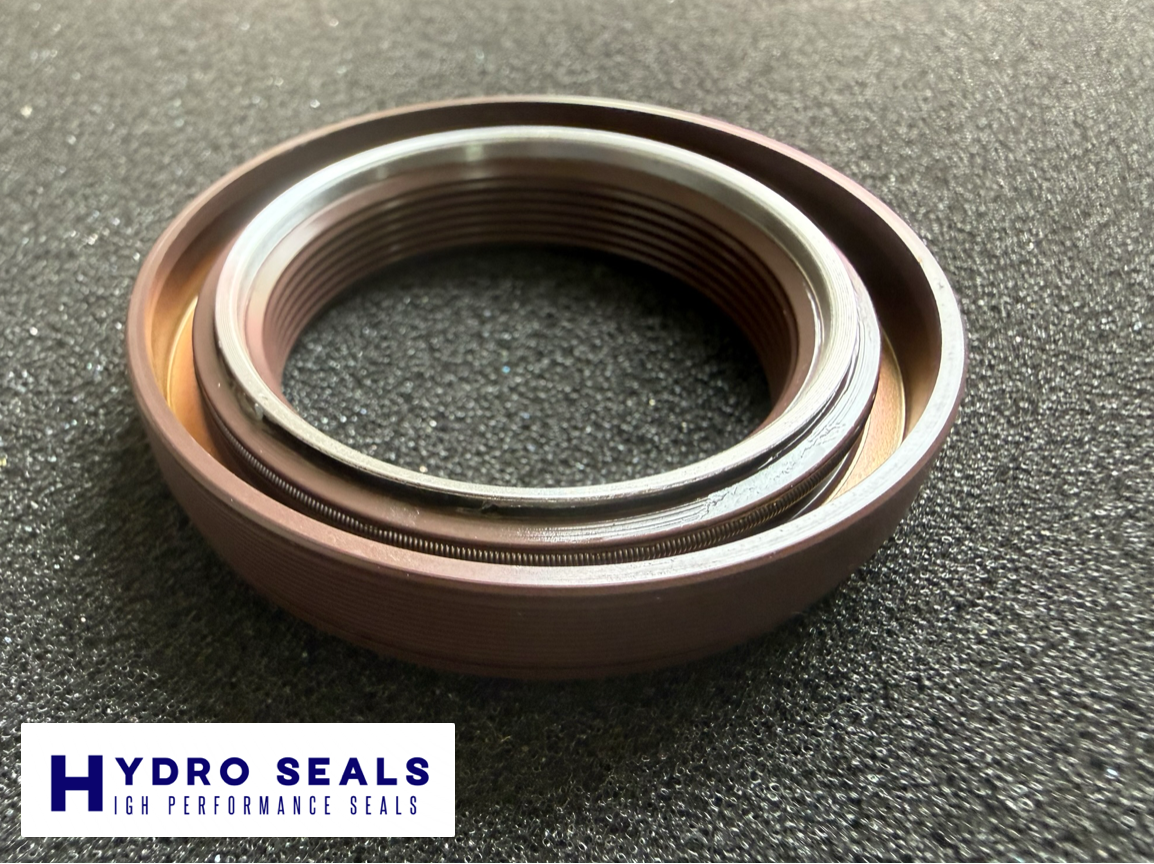
FKM vs NBR Oil Seals – Which One Should You Choose? Selecting the right oil seal material is critical for shaft sealing performance, equipment reliability, and long-term maintenance cost control. The two most commonly used elastomers in rotary shaft oil seals are FKM (Viton®) and NBR (Nitrile Rubber). While both are widely used in industrial and automotive applications, their performance characteristics differ significantly. 🔬 Material Overview NBR (Nitrile Rubber) Oil Seals NBR is the most widely used elastomer for general-purpose oil sealing. It offers good resistance to mineral oils, greases, and hydraulic fluids at moderate temperatures. FKM (Viton®) Oil Seals FKM is a premium fluoroelastomer designed for high-temperature and chemically aggressive environments. It offers superior resistance to fuels, synthetic lubricants, solvents, and extreme thermal conditions. ⚙️ When to Choose NBR Oil Seals Standard industrial gearboxes Hydraulic systems with mineral oils Automotive applications (normal temperature range) Cost-sensitive maintenance applications General-purpose shaft sealing ⚙️ When to Choose FKM (Viton®) Oil Seals High-temperature environments (above 120°C) Synthetic lubricants and aggressive fuels Chemical processing equipment Oil & gas rotating machinery Heavy-duty industrial applications Applications requiring longer maintenance intervals 🏭 Industry Applications Automotive & OEM Manufacturing Chemical & Petrochemical Plants Oil & Gas Industry Heavy Engineering Power Generation Steel & Cement Industries ✅ Conclusion – Which Oil Seal is Better? There is no universal “better” material—selection depends on operating temperature, media compatibility, shaft speed, and budget. Choose NBR for standard oil applications with moderate temperature. Choose FKM (Viton®) for high-temperature, aggressive fluid, and long-life applications. Proper material selection reduces leakage, improves equipment reliability, and lowers long-term operational costs.


This is your website preview.
Currently it only shows your basic business info. Start adding relevant business details such as description, images and products or services to gain your customers attention by using Boost 360 android app / iOS App / web portal.
FKM vs NBR Oil Seals – Which One Should You Choose?
2026-03-01T06:20:16
FKM vs NBR Oil Seals – Which One Should You Choose? Selecting the right oil seal material is critical for shaft sealing performance, equipment reliability, and long-term maintenance cost control. The two most commonly used elastomers in rotary shaft oil seals are FKM (Viton®) and NBR (Nitrile Rubber). While both are widely used in industrial and automotive applications, their performance characteristics differ significantly. 🔬 Material Overview NBR (Nitrile Rubber) Oil Seals NBR is the most widely used elastomer for general-purpose oil sealing. It offers good resistance to mineral oils, greases, and hydraulic fluids at moderate temperatures. FKM (Viton®) Oil Seals FKM is a premium fluoroelastomer designed for high-temperature and chemically aggressive environments. It offers superior resistance to fuels, synthetic lubricants, solvents, and extreme thermal conditions. ⚙️ When to Choose NBR Oil Seals Standard industrial gearboxes Hydraulic systems with mineral oils Automotive applications (normal temperature range) Cost-sensitive maintenance applications General-purpose shaft sealing ⚙️ When to Choose FKM (Viton®) Oil Seals High-temperature environments (above 120°C) Synthetic lubricants and aggressive fuels Chemical processing equipment Oil & gas rotating machinery Heavy-duty industrial applications Applications requiring longer maintenance intervals 🏭 Industry Applications Automotive & OEM Manufacturing Chemical & Petrochemical Plants Oil & Gas Industry Heavy Engineering Power Generation Steel & Cement Industries ✅ Conclusion – Which Oil Seal is Better? There is no universal “better” material—selection depends on operating temperature, media compatibility, shaft speed, and budget. Choose NBR for standard oil applications with moderate temperature. Choose FKM (Viton®) for high-temperature, aggressive fluid, and long-life applications. Proper material selection reduces leakage, improves equipment reliability, and lowers long-term operational costs.
2026-03-01T06:20:16


Keywords
- shaft sealing performance
- long-term equipment reliability
- maintenance cost reducing seals
- FKM Viton oil seals
- NBR nitrile rubber seals
- oil and gas sealing equipment
- heavy-duty industrial seals
- synthetic lubricant resistant seals
- mineral oil resistant seals
- automotive oil seal applications
- chemical resistant oil seals
- high temperature oil seals
- industrial shaft sealing solutions
- NBR vs FKM oil seals
- oil seal material selection
Submit Your Enquiry